

Summary
EL Education provides lesson-based and organizational approaches to SEL. It includes programming for grades K-8 and demonstrates evidence of effectiveness at grades 6-8. Spanish translations for some materials are available.
Strategies supporting educational equity (CASEL)
EL Education offers strategies for understanding context, working with bias, and youth action projects. This includes guidance for creating student-teacher collaborative advisory groups, a deep focus on diversity, equity, and inclusion (specifically, anti-racism), and an emphasis on identifying community needs and creating collective action.
Implementation
Below are key implementation details for this program. These specifications help determine if the program is a good fit for your school or organization.
Grade(s)
Elementary (K-5), Middle (6-8)
Setting
Classroom, Schoolwide, Home, Community
Language
English, Spanish
Cost
Pricing available through provider
Program Design
Tier 1 (Universal)
Technology Requirements
None Required
Staffing Requirements
No additional staffing required
Professional Development
Onsite, Virtual, Offsite, Train the Trainer
Outcomes
Improved SEL skills and attitudes
Reduced Emotional Distress
Improved Identity Development/ Agency
Improved Academic Performance
Reduced Problem Behavior
Improved School Climate
Improved School Connectedness
Improved Prosocial Behavior
Improved Teaching Practices
Improved SEL Skills and Attitude
Evidence of Effectiveness
Results from a quasi-experimental evaluation (unpublished report written in 2013) supported the effectiveness of EL Education for middle school students. This evaluation included 3,016 grade 6 through 8 students enrolled in schools in the U.S. Southeast and Northeast. This evaluation found that students who participated in the program achieved significantly higher standardized test scores in reading compared to students in the control group (outcomes reported one year after baseline while controlling for outcome pretest). Follow effects were observed, more specifically participating students’ reading test scores were significantly higher than control students when assessed two and three years after baseline.
Results from a randomized controlled trial conducted over the 2014-2017 academic years using a cohort model (unpublished report written in 2019) supported the effectiveness of EL Education for middle school students. This evaluation included 12,859 grade 6 through 8 students enrolled in schools nationwide (38% white, 35% Black/African American, 20% Latinx; 60% eligible for free or reduced-price lunch (FRPL)). This evaluation found that students whose teachers received EL Education training demonstrated significantly positive social classroom behaviors compared to students in the control group (outcomes reported one year after baseline while controlling for outcome pre-test and a host of relevant covariates). Additionally, receiving the EL Education training had a significant positive impact on teachers’ practices, including ELA instructional practices, as well as strategies that promote student collaboration and higher-order thinking.
Strong Relationships
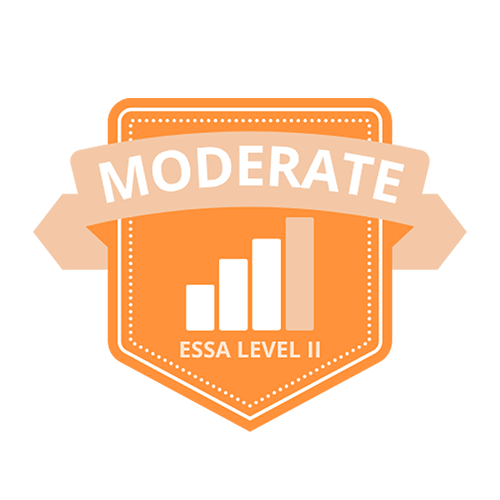
Moderate
Published Studies
Refer to the provided CASEL for the most up-to-date published studies.
Dolfin, S., Richman, S., Choi, J., Streke, A., DeSaw, C., Demers, A., & Poznyak, D. (2019). Evaluation of the Teacher Potential Project. Unpublished report.
Nichols-Barrer, I., & Haimson, J. (2013). Impacts of Five Expeditionary Learning Middle Schools on Academic Achievement. Unpublished report.