

Summary
I Can Problem Solve provides a lesson-based approach to SEL. It includes programming for grades Pre-K-5 and demonstrates evidence of effectiveness at grade 1. Translated materials for the preschool and kindergarten levels as well as the parent program are available in Spanish.
Strategies supporting educational equity (CASEL)
Not available at this time.
Implementation
Below are key implementation details for this program. These specifications help determine if the program is a good fit for your school or organization.
Grade(s)
Pre-K, Elementary (K-5)
Setting
Classroom, Schoolwide, Home
Language
English, Spanish
Cost
ICPS Implementation Training of Trainers (up to 50 people) $4800 + travel expenses. Training includes 2 full days of on-site training, virtual training following implementation, 5 hours of coaching and consultation. *requirements vary Curriculum purchased separately: Research Press www.researchpress.com approximately $40/classroom +shipping and handling
# Lessons
35
Program Design
Tier 1 (Universal)
Technology Requirements
None Required
Staffing Requirements
Staff is needed to support implementation. When ICPS is used in classrooms, it is important that the classroom teacher is the primary implementer of ICPS lessons. Lessons are 10-20 min., delivered 2-3 times per week over 3-5 months. ICPS concepts are integrated into classroom routines and instruction becoming part of educational culture.
Professional Development
Onsite in-person, Virtual, Offsite, Train the Trainer, Training includes 2 full days of on-site professional development, 2-3 hour virtual training following implementation, 5 hours of coaching and consultation. On-going professional support provided as needed.
Outcomes
Improved SEL skills and attitudes
Reduced Emotional Distress
Improved Identity Development/ Agency
Improved Academic Performance
Reduced Problem Behavior
Improved School Climate
Improved School Connectedness
Improved Prosocial Behavior
Improved Teaching Practices
Improved SEL Skills and Attitude
Evidence of Effectiveness
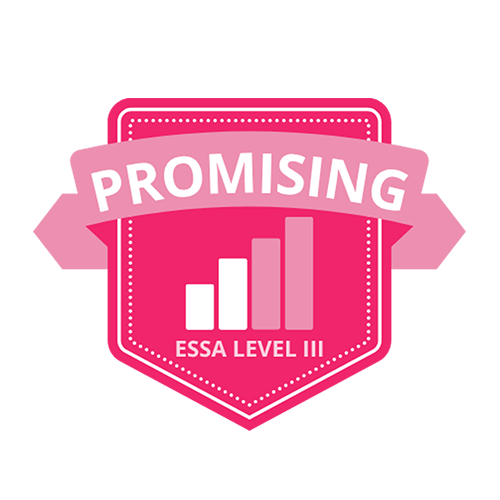
I Can Problem Solve was evaluated in a study that randomized first grade classrooms from seven schools to receive ICPS alone or ICPS with Strengthening Families, a multicomponent family skills training program, and compared these students to a no-treatment control condition from 5 other schools in the Rocky Mountain region. A total of 655 students participated in the study. Differences were found at the student level on self-regulation (effect size = +0.18), qualifying I Can Problem Solve for a “Promising” rating for Emotional Well-being.
Results from a randomized controlled trial conducted in the 1997-1998 school year (published in 2002) supported the effectiveness of I Can Problem Solve for early elementary school students. This evaluation included 578 grade 1 students enrolled in multiple rural schools in the U.S. West region (87% white; sample was largely middle class). Students who participated in the program had greater growth in teacher-reported self-regulation (i.e., decreases in impulsivity, hyperactivity, aggressive, disruptive behaviors) and in student-reported school bonding (i.e., engagement and student-teacher relationship quality) compared to students in the control group (nine months after baseline, analyses controlled for outcome pretest).
Emotional Wellbeing
Promising
Published Studies
Kumfer, K. L., Alvarado, R., Tait, C., & Turner, C. (2002). Effectiveness of school-based family and children’s skills training for substance abuse prevention among 6-8 year old rural children. Psychology of Addictive Behaviors, 16 (48), 565-571.