
Summary
Getting Along Together, offered by the Success for All Foundation, provides lesson-based and teaching practices approaches to SEL. It includes programming for grades K-5 and demonstrates evidence of effectiveness at grades K and 3.
Getting Along Together, or GAT, is a schoolwide intervention for grades K-3, designed to enhance students’ social, emotional, and self-regulation skills. Getting Along Together was originally designed as a component of the Success for All whole-school reform model, but it is now also disseminated as a stand-alone program. Enhancements to GAT were researched and evaluated by Jacob, Jones, & Morrison (2013) under the name SECURe, for Social, Emotional, and Cognitive Understanding and Regulation in education. GAT provides weekly lessons that focus on skills such as feeling identification and communication, cooperative learning, win-win conflict resolution, self-regulation of attention to enhance learning, and frustration management. Strategies for effective social relationships and coping skills are presented using characters, stories, and videos to provide engaging and memorable models of desired skills for students. For example, a penguin, Chilly, has serious problems controlling his anger when things go wrong, and learns how to give himself a “Chilly Hug” and count to five when he is about to lose his composure. The children then learn how to recognize when they are frustrated and angry, and learn to give themselves “Chilly Hugs.” Animal characters learn to solve interpersonal problems, and lessons for students are built around discussions about how the animals can learn to manage their own behavior. GAT also has a strong emphasis on cooperative learning, and develops schoolwide structures such as a “Peace Path” to set expectation for a positive school climate and conflict resolution. Teachers receive 1 ½ days of training each year and are visited by coaches who give them feedback and new ideas.
Strategies supporting educational equity (CASEL)
Not available at this time.
Implementation
Below are key implementation details for this program. These specifications help determine if the program is a good fit for your school or organization.
Grade(s)
Elementary (K-5)
Setting
Classroom, Schoolwide, Home
Language
English
Cost
Pricing available through provider
# Lessons
Weekly
Program Design
Tier 1 (Universal)
Technology Requirements
None Required
Staffing Requirements
No additional staffing required
Professional Development
1.5 days of PD per year
Outcomes
Improved SEL skills and attitudes
Reduced Emotional Distress
Improved Identity Development/ Agency
Improved Academic Performance
Reduced Problem Behavior
Improved School Climate
Improved School Connectedness
Improved Prosocial Behavior
Improved Teaching Practices
Improved SEL Skills and Attitude
Evidence of Effectiveness
Results from a randomized controlled trial conducted in the 2011-2012 school year (report written in 2013) support the effectiveness of Getting Along Together curriculum for elementary students. The evaluation included 4,410 kindergarten through grade 3 students enrolled in schools in the Southwest (80% Hispanic; 92% of students eligible for free or reduced-price lunch (FRPL)). This evaluation was found to be effective for kindergarten (n = 1,151) and grade 3 (n = 1,069) students, but did not find effects for grade 1 or grade 2 students. This evaluation found that kindergarten students who participated in the program improved in observer-reported attentive and impulsive behaviors compared to students in the control group (outcomes reported approximately eight months after baseline while controlling for outcome pretest). However, this evaluation also found that kindergarten students who participated in the program performed worse on a test of working memory compared to students in the control group (outcomes reported approximately eight months after baseline while controlling for outcome pretest). Additionally, this evaluation found that grade 3 students who participated in the program exhibited lower levels of hostile attribution bias assessed via vignettes compared to students in the control group (outcomes reported approximately eight months after baseline while controlling for outcome pretest).
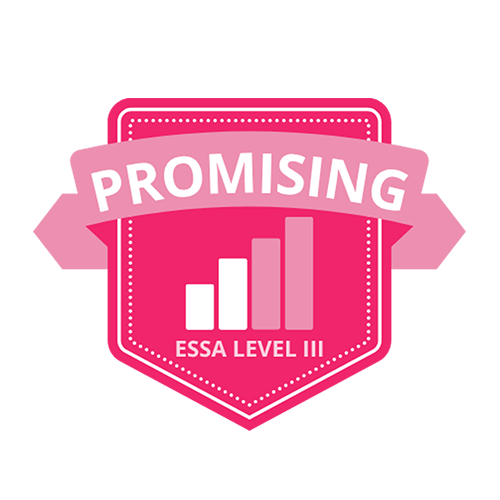
Getting Along Together has been evaluated under the SECURe title by Jacob, Jones, & Morrison (2013). In this study, six Success for All schools not using GAT/SECURe in Phoenix, Arizona, were randomly assigned to use GAT or to continue with their usual activities. Students were individually assessed on social, emotional, and self-regulation skills by testers unaware of each school’s assignment. A total of approximately 1100 students were assessed on social skills measures, and 4400 for academic outcomes in grades K-3. 71% of students were Hispanic, and 51% were English learners. 92% qualified for free lunch. Effect sizes favored GAT on literacy growth (ES=+0.08) and attention measures (ES=+0.13). The academic performance and engagement outcomes qualified GAT for a “Promising” evidence rating for the Academic category.
Academic
Promising
Published Studies
Jacob, R., Jones, S., & Morrison, F. (2013). Evaluating the impact of a self-regulation impact (SECURe) on self-regulation and achievement. Unpublished manuscript.